

Starting a phone case shop sounds appealing with the global market projected to grow steadily, but profitability isn’t guaranteed. Many entrepreneurs underestimate the cost structure and timeline required to turn a profit. This guide breaks down the real costs, margin expectations, and strategic levers that determine whether your phone case business will thrive or struggle. You’ll learn what drives expenses, how different business models affect margins, and actionable strategies to optimize profitability from day one.
Table of Contents
- Understanding The Cost Structure Of A Phone Case Shop
- Analyzing Revenue, Margins, And Profitability Timelines
- Choosing The Right Business Model And Optimizing Profit Margins
- Executing Marketing Strategies To Boost Profitability
- Explore Mockup Solutions To Enhance Your Phone Case Business
- How Profitable Is A Phone Case Shop In The First Year?
- What Business Model Offers The Highest Profit Margins?
- How Can I Lower Customer Acquisition Costs Effectively?
- When Can I Expect My Phone Case Shop To Break Even?
Key takeaways
| Point | Details |
|---|---|
| Marketing drives costs | Customer acquisition typically consumes $25,000 monthly, making it the largest expense category. |
| Strong gross margins mislead | Phone cases deliver 82% gross margins, but overhead costs often eliminate net profit in early years. |
| Profitability takes patience | Most shops break even around month 28 and achieve positive operating margins by year three. |
| Business model matters significantly | Premium custom cases yield 60-80% profit margins versus 15-30% for dropshipping models. |
| Retention beats acquisition | Shifting 30% of marketing spend to customer retention dramatically improves lifetime value and profitability. |
Understanding the cost structure of a phone case shop
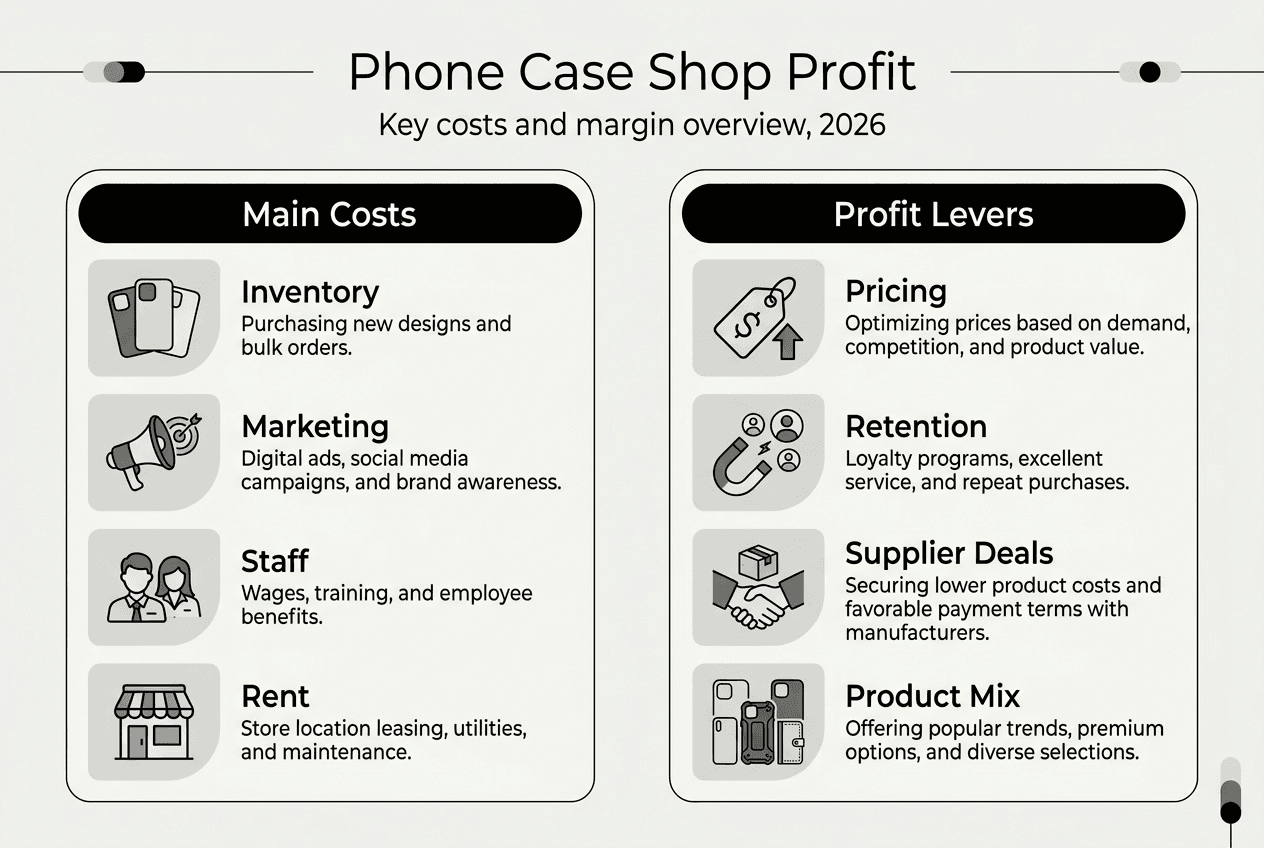
Before launching a phone case shop, you need a clear picture of both upfront investment and recurring monthly expenses. The financial reality is more complex than most entrepreneurs anticipate. Marketing and customer acquisition cost typically runs $25,000 monthly, representing your largest single expense. This covers paid advertising, influencer partnerships, content creation, and promotional campaigns necessary to build brand awareness and drive traffic.
Fixed overhead costs include $6,000 for office rent and $8,000 for research and development or design studio expenses. Beyond marketing and fixed costs, you’ll face website hosting fees around $300 monthly, inventory purchases that scale with demand, and fulfillment expenses. Most phone case shops require minimum startup capital of approximately $1.4 million to cover initial inventory, equipment, branding, and operating expenses for the first six months. First year revenue typically reaches only $330,000, creating a significant cash flow gap.
Your cost structure breaks into several categories:
- Product costs: Manufacturing or wholesale purchase of cases, packaging materials, quality control
- Marketing expenses: Digital ads, influencer deals, content production, email campaigns
- Operational overhead: Rent, utilities, software subscriptions, payment processing fees
- Personnel: Customer service, designers, fulfillment staff, administrative support
- Technology: E-commerce platform fees, design software, inventory management systems
Understanding where money flows helps you identify optimization opportunities. When buying blank phone cases, negotiating bulk discounts and favorable payment terms can preserve precious working capital. Many successful shop owners secure net 30 or net 60 payment arrangements with suppliers, allowing them to sell products before paying manufacturers.
Pro Tip: Negotiate supplier payment terms aggressively in your first conversations. Extending payment windows from net 15 to net 45 can free up $20,000 or more in working capital during critical growth phases.
The gap between revenue and expenses in year one creates negative cash flow for most shops. Planning for this reality prevents panic and poor decisions when initial sales don’t cover costs. Smart entrepreneurs model worst case scenarios and secure adequate financing before launch, not after running short on cash.
Analyzing revenue, margins, and profitability timelines
Revenue generation follows a predictable but challenging curve for phone case shops. Gross margin on phone cases typically averages about 82%, appearing highly attractive on paper. However, fixed overhead costs consume profits aggressively in early years, transforming strong product margins into negative net income. The difference between gross and operating margins tells the real profitability story.

Operating margins usually start near negative 10% in year one, improving to 15-20% by year three with focused execution. This three year timeline reflects the reality of building brand recognition, optimizing marketing efficiency, and achieving economies of scale. First year struggles are normal, not signs of failure. Patience and strategic discipline separate successful shops from those that close prematurely.
Break-even analysis reveals critical benchmarks. Most phone case shops need approximately 28 months to reach break-even, requiring monthly revenue around $16,174 to cover all expenses without profit. Reaching this threshold faster demands aggressive customer acquisition paired with ruthless cost management. Every month you shorten the break-even timeline saves thousands in cumulative losses.
Revenue and margin progression typically follows this pattern:
| Year | Revenue | Gross Margin | Operating Margin | Net Result |
|---|---|---|---|---|
| Year 1 | $330,000 | 82% | -10% | Loss |
| Year 2 | $580,000 | 82% | 5% | Small profit |
| Year 3 | $920,000 | 83% | 18% | Solid profit |
Several factors accelerate the journey from negative to positive margins. Marketing efficiency improves as you identify which channels deliver customers at acceptable costs. Cost control tightens as you eliminate wasteful spending and negotiate better supplier terms. Scaling enables bulk purchasing discounts and operational leverage where fixed costs spread across more units.
Understanding these timelines helps you set realistic expectations and secure adequate financing. Investors and lenders want to see you’ve modeled the cash burn period accurately and planned for contingencies. When selling phone cases profitably, patience through the initial loss period is just as important as product quality or marketing creativity.
Choosing the right business model and optimizing profit margins
Your choice of business model fundamentally determines profit potential and operational complexity. Profit margins by model vary dramatically: dropshipping delivers 15-30%, custom printing achieves 40-60%, and premium branded cases reach 60-80%. Each model involves distinct tradeoffs between margin, control, investment, and scalability. Selecting the right fit for your skills and resources is critical.
Dropshipping offers the lowest barrier to entry but also the thinnest margins. You avoid inventory risk and upfront costs, but sacrifice margin and brand control. Print-on-demand sits in the middle, offering customization without inventory while maintaining reasonable margins. Premium models demand higher investment in design, branding, and inventory but reward you with exceptional margins and customer loyalty.
Print-on-demand models have higher per-unit costs ranging from $7.95 to $9.00 versus bulk ordering which lowers costs via economies of scale. When you order 1,000 cases instead of 100, per-unit costs might drop from $8 to $4, doubling your margin on each sale. This creates a chicken-and-egg challenge: you need volume to get better pricing, but better pricing helps you achieve volume through competitive retail prices.
Strategies to optimize margins regardless of model:
- Negotiate aggressively with suppliers: Request volume discounts even before hitting thresholds, leverage competing quotes
- Automate fulfillment: Reduce labor costs through warehouse management systems and shipping automation
- Outsource non-core functions: Use third-party logistics for warehousing and shipping to avoid fixed overhead
- Test premium pricing: Many entrepreneurs underprice; experiment with 20-30% higher prices on select SKUs
- Bundle products: Increase average order value by offering case and accessory bundles at attractive prices
When exploring print-on-demand phone cases, compare multiple providers on quality, speed, and cost. Small differences in per-unit costs compound dramatically across thousands of sales. Similarly, understanding phone case mold options helps you make informed decisions about custom manufacturing versus standard designs.
Pro Tip: Shift 20-30% of your marketing budget from new customer acquisition to retention programs like email sequences, loyalty rewards, and referral incentives. Repeat customers cost far less to serve and generate higher lifetime value.
The business model you choose today isn’t permanent. Many successful shops start with dropshipping to validate demand, transition to print-on-demand for better margins, then eventually move to bulk manufacturing as volume justifies investment. This staged approach manages risk while building toward optimal profitability.
Executing marketing strategies to boost profitability
Marketing excellence separates profitable phone case shops from struggling ones. Marketing and customer acquisition cost of $25,000 monthly can be optimized by shifting 30% to retention efforts, dramatically improving unit economics. The most successful brands diversify across multiple channels while tracking performance religiously to eliminate waste.
Successful brands like PopSocket grew 400% by combining product placement, influencer partnerships, and retail presence. Their multi-channel approach created brand ubiquity, making PopSocket synonymous with phone grips. You don’t need their budget to apply similar principles: start with two or three channels, master them, then expand.
Key marketing channels and tactics for phone case shops:
- Influencer partnerships: Micro-influencers (10,000 to 100,000 followers) often deliver better ROI than celebrities
- Product placement: Send free cases to relevant content creators and hope for organic mentions
- Social media advertising: Instagram and TikTok excel for visual products like phone cases
- Retail presence: Pop-up shops and consignment deals build brand credibility
- Content marketing: Tutorial videos, style guides, and behind-the-scenes content engage audiences
Building a loyal customer base requires systematic effort:
- Capture email addresses at every touchpoint with compelling lead magnets
- Segment customers by purchase behavior, preferences, and engagement level
- Create automated email sequences for abandoned carts, post-purchase follow-up, and re-engagement
- Implement a referral program offering discounts for both referrer and referred customer
- Survey customers regularly to gather feedback and identify improvement opportunities
- Reward repeat purchases with loyalty points, exclusive designs, or early access to new products
Tracking the right metrics prevents wasted marketing spend. Monitor customer acquisition cost, conversion rate, average order value, and customer lifetime value weekly. When acquisition cost exceeds 30% of lifetime value, your model isn’t sustainable. Successful shops maintain acquisition costs below 20% of lifetime value, leaving room for profit after product costs and overhead.
Applying proven phone case marketing tips and following a solid phone case branding guide accelerates your path to profitability. Strong branding commands premium prices, reduces price sensitivity, and builds customer loyalty that compounds over time.
Pro Tip: Use real-time analytics dashboards to monitor inventory levels, marketing performance, and cash flow daily. Quick adjustments to underperforming campaigns or out-of-stock products can save thousands monthly.
Marketing isn’t about spending more; it’s about spending smarter. The shops that thrive in 2026 will be those that master data-driven optimization, ruthlessly cutting ineffective channels while doubling down on winners.
Explore mockup solutions to enhance your phone case business
Professional product presentation directly impacts conversion rates and perceived value. High-quality mockups transform generic product photos into compelling visual stories that drive purchases. Bettermockups specializes in photorealistic iPhone case mockups designed specifically for e-commerce sellers who need to showcase designs beautifully without expensive photoshoots.
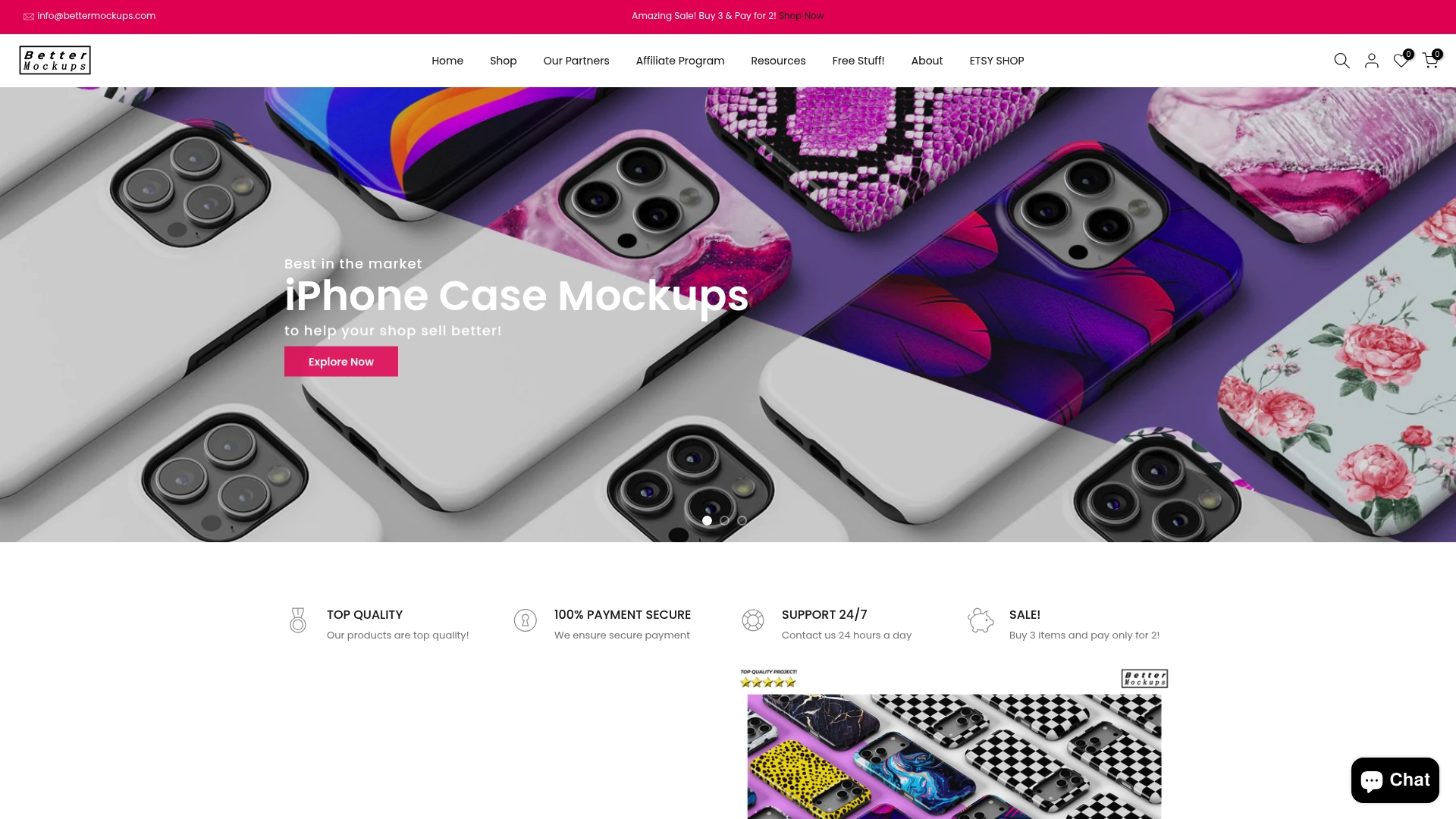
Beyond static images, video mockups for phone cases create dynamic social media content that stops scrolling and captures attention. These animated templates work seamlessly with your existing designs, letting you produce professional marketing assets in minutes rather than hours. The complete mockup collection includes templates for various phone models, accessories, and presentation styles, giving you flexibility to match any campaign or platform requirement.
How profitable is a phone case shop in the first year?
Most phone case shops operate at a loss or near negative 10% operating margin during year one. This reflects the heavy upfront investment in inventory, branding, and customer acquisition before achieving meaningful scale. Revenue typically reaches only $330,000 while expenses exceed $360,000, creating a cash flow deficit. Patience and adequate financing are essential to survive this initial period. Shops that panic and cut marketing often worsen their position by slowing growth.
What business model offers the highest profit margins?
Premium and customized phone cases deliver the highest profit margins, ranging from 60% to 80%. These models require stronger branding, superior design capabilities, and higher initial investment in inventory and marketing. The premium positioning justifies retail prices of $30 to $60 per case versus $10 to $20 for commodity products. Customers pay for perceived quality, exclusivity, and brand association. Building a premium brand takes longer but creates sustainable competitive advantages.
How can I lower customer acquisition costs effectively?
Shift 20-30% of your marketing budget from new customer acquisition to retention programs targeting existing buyers. Retention marketing costs 5 to 7 times less than acquisition while generating comparable revenue. Optimize your conversion funnel by A/B testing landing pages, checkout processes, and ad creative systematically. Track which channels deliver customers at acceptable costs and eliminate underperformers ruthlessly. Implement referral programs that turn satisfied customers into acquisition channels. Review detailed phone case marketing tips for specific tactics.
When can I expect my phone case shop to break even?
Break-even typically requires approximately 28 months with monthly revenues around $16,000 or higher. This timeline assumes disciplined cost management, effective marketing optimization, and steady revenue growth. Shops that exceed $20,000 in monthly revenue by month 12 often break even by month 20. Conversely, those struggling to reach $10,000 monthly may need 36 months or longer. Accelerating break-even demands aggressive customer acquisition paired with ruthless elimination of wasteful spending.


