

Finding products that stand out in a crowded tech accessory market can feel overwhelming. As global demand rises for personalized experiences and sustainability, print-on-demand offers a path for entrepreneurs who want flexibility, speed, and less inventory risk. The global POD market is set for major growth in 2026, powered by rapid tech innovation and consumer demand for custom, small-batch items. This article breaks down why understanding these trends can help you launch smarter products and sharpen your marketing for the year ahead.
Table of Contents
- Print On Demand In 2026 Explained
- Emerging Niches For Tech Accessories
- AI And Automation In Customization
- Supply Chain And Sustainability Drivers
- Marketing Strategies For Digital Product Sales
Key Takeaways
| Point | Details |
|---|---|
| Print-on-Demand Growth | Print-on-demand has transformed e-commerce by allowing customized products to be created and shipped per order, eliminating inventory risks for entrepreneurs. |
| Emerging Niches | Tech accessory markets are expanding in specific niches like health-tracking wearables and sustainable products, which provide high-margin opportunities. |
| AI and Automation | AI is revolutionizing product design and personalization, enabling faster market response and reducing manual tasks for tech accessory sellers. |
| Sustainability in Supply Chains | Brands must adopt sustainable practices and transparency in their supply chains to meet consumer demands and gain a competitive edge in 2026. |
Print on Demand in 2026 Explained
Print-on-demand (POD) has transformed from a niche solution into a fundamental driver of global e-commerce growth. At its core, POD is a business model that lets you create and sell custom products only when customers actually order them. You don’t need massive inventory sitting in warehouses. Instead, products get manufactured, printed, and shipped directly to your customers after purchase. This approach eliminates the inventory risk that traditionally haunts retail, especially for tech accessory entrepreneurs testing new designs or targeting niche markets. The POD market is experiencing significant momentum heading into 2026, with consumer demand for personalization and flexibility pushing platforms to innovate faster than ever.
What makes 2026 particularly exciting for tech accessory sellers is the convergence of three powerful forces. First, personalization has moved from a “nice-to-have” feature to table stakes. Customers now expect customized phone cases, AirPods covers, and other tech accessories that reflect their identity rather than settle for mass-produced alternatives. Second, sustainable practices are no longer optional. Conscious consumers actively seek brands that minimize waste and environmental impact, and POD naturally aligns with this preference by eliminating overproduction. Third, technology itself is accelerating capabilities. Advanced fulfillment networks, AI design tools, and smarter production methods are making it faster and cheaper to bring products to market. Apparel remains the dominant product category, but home decor and personalized gifts are expanding rapidly. For tech accessory businesses, this means the infrastructure supporting POD is becoming more sophisticated and cost-effective every quarter.
The practical benefit of understanding POD in 2026 is recognizing how it removes traditional barriers to growth. You can launch new product lines without financial risk. Want to test a custom MacBook sleeve design or a personalized AirPods case with UV printing capabilities? You simply create the design, set it live, and start taking orders. If demand exists, you scale. If it doesn’t, you pivot without capital loss. Specialized printing techniques like UV printing are becoming increasingly accessible through POD partnerships, meaning sophisticated product finishes that once required massive minimum orders are now available at single-unit quantities. This flexibility is exactly what forward-thinking e-commerce entrepreneurs need to compete against larger players who are locked into inflexible inventory decisions.
Pro tip: Start mapping out which tech accessory categories perform best in your current market before 2026 arrives, then use POD to test premium variations (different materials, finishes, or customization options) with minimal financial commitment.
Emerging Niches for Tech Accessories
The tech accessory market is splitting into specialized pockets of opportunity that go far beyond standard phone cases and screen protectors. The global consumer electronic accessories market is projected to reach USD 230.52 billion by 2026, with a compound annual growth rate of 5.68 percent, but the real story is where that growth concentrates. Smartphone protective cases remain foundational, but the momentum is shifting toward audio peripherals like wireless earbuds cases, health-monitoring wearable accessories, and smart device integration products. These niches emerged because consumers stopped treating accessories as afterthoughts. They now view them as essential components of their tech ecosystems, each deserving thoughtful design and functionality. For tech accessory entrepreneurs, this fragmentation creates pockets of high-margin opportunity where you can build genuine brand loyalty instead of competing solely on price.
Wireless audio and wearable tech represent the fastest-growing segments within the broader market. Wireless health-aware accessories and smart device integration are reshaping how consumers interact with their personal technology. Think beyond basic AirPods cases. Brands are now creating specialized cases that accommodate health sensors, magnetic charging solutions, and modular designs that adapt to different use cases. Smart wearable accessories that sync with phones or track fitness metrics are generating premium price points because they deliver genuine utility. Home charging stations with integrated wireless charging pads, cable organizers, and device stands are becoming high-ticket niche products. UV-printed tech cases with antimicrobial properties are gaining traction in health-conscious markets. Gaming peripheral accessories like phone cooling clips, trigger attachments, and RGB-lit charging docks appeal to mobile gamers. These are not broad categories; they are laser-focused niches where customization and premium quality command premium pricing.

Sustainability has carved out its own niche that deserves your attention heading into 2026. Consumers actively seek eco-friendly phone cases made from recycled materials, biodegradable packaging, and responsibly sourced alternatives to plastic. This niche skews toward environmentally conscious buyers willing to pay more for accessories that align with their values. Modular accessories that reduce e-waste by extending device lifespan through replaceable components appeal to this segment. Customizable sustainable cases let customers feel ownership while supporting environmental goals. What makes this niche particularly attractive for POD entrepreneurs is that custom, sustainable products can command 30-40 percent price premiums compared to mass-produced alternatives.
Pro tip: Pick one emerging niche that aligns with your target audience’s values (sustainability, health tracking, gaming), then use POD to test 3-5 design variations within that niche before scaling inventory commitments.
Here’s a comparison of top emerging tech accessory niches for 2026:
| Niche Focus | Key Products | Target Audience | Growth Potential |
|---|---|---|---|
| Health-Tracking Wearables | Smartbands, medical accessory cases | Fitness/health consumers | High, driven by trend |
| Gaming Accessories | Cooling clips, RGB charging docks | Mobile gamers | Strong, premium sales |
| Sustainable Products | Biodegradable cases, eco packaging | Environmentally conscious | High, +30-40% premium |
| Audio Peripherals | Wireless earbud cases, organizers | Tech enthusiasts | Steady, rapid updates |
AI and Automation in Customization
Artificial intelligence has stopped being a futuristic concept and become your competitive advantage in 2026. AI is fundamentally changing how tech accessory entrepreneurs approach design, production, and customer experience. Instead of spending hours manually creating product mockups or writing product descriptions for dozens of SKUs, AI handles the repetitive heavy lifting. AI-driven automation reduces manual tasks like product listing uploads and mockup generation, freeing you to focus on strategy and marketing. Think of AI as your personal design assistant that never sleeps. You input a concept like “gaming phone case with neon accents and RGB lighting effects,” and AI generates multiple design variations in minutes, complete with photorealistic mockups showing exactly how the product will look on different phone models. This speed advantage means you can test market demand for new designs faster than competitors still relying on traditional workflows.
The customization experience itself is being transformed by AI-powered personalization. When a customer visits your store, AI can generate dynamic product previews in real time based on their preferences, purchase history, or even the phone model they’re currently using. This level of personalization significantly boosts buyer confidence and reduces returns because customers see exactly what they will receive before ordering. AI acts as a co-creator, turning natural language inputs into saleable designs while producing layout variations rapidly. A customer could simply describe what they want: “customize my AirPods case with my name in cursive and a minimalist landscape,” and AI generates multiple design options instantly. What once required back-and-forth communication with a designer now happens in seconds. Branding consistency improves automatically because AI learns your brand guidelines and applies them across every product variation.
Scalability becomes realistic when AI handles the operational grunt work. Without automation, managing 100 SKUs with custom variations means updating mockups, descriptions, inventory, and listings across multiple sales channels manually. This is exhausting and error-prone. AI automates these multichannel publishing tasks, intelligently updating product information across your store, marketplace listings, and social media simultaneously. Order accuracy improves because AI-powered systems validate specifications before production, catching mismatches between customer requests and design files. For tech accessory entrepreneurs particularly, this matters because customers expect precision. A misspelled name or color mismatch on a custom phone case damages trust. AI eliminates these mistakes while simultaneously allowing you to manage substantially larger product portfolios without proportionally increasing your workload.
Pro tip: Start with an AI-powered mockup generator and product listing automation tool to handle your current inventory, then use the time savings to develop new niche products or expand into adjacent categories like personalized charging accessories.
The table below summarizes how AI benefits the POD business workflow:
| AI Functionality | Business Impact | Time Savings |
|---|---|---|
| Automated mockups | Faster product launches | Concept-to-shelf in days |
| AI-driven listings | Streamlined multichannel publishing | Reduced manual entry |
| Personalization | Higher buyer confidence, fewer returns | Improved conversion |
| Error reduction | Accurate orders, less rework | Fewer customer complaints |
Supply Chain and Sustainability Drivers
Sustainability has transitioned from a marketing talking point to a structural requirement in how tech accessory brands operate. Consumers increasingly demand visibility into where products come from, how they are manufactured, and what environmental impact they generate. This shift represents a fundamental change in supply chain priorities heading into 2026. Sustainability in supply chains is evolving from regulatory compliance to strategic advantage, meaning the brands that embed sustainable practices early gain competitive positioning and customer loyalty simultaneously. Print-on-demand naturally aligns with this shift because it eliminates excess inventory that ends up in landfills. You only manufacture what sells. This inherent sustainability advantage becomes a powerful marketing differentiator when communicated clearly to environmentally conscious consumers. Tech accessory entrepreneurs who can demonstrate minimal waste, responsible sourcing, and transparent production processes attract premium customers willing to pay higher margins.
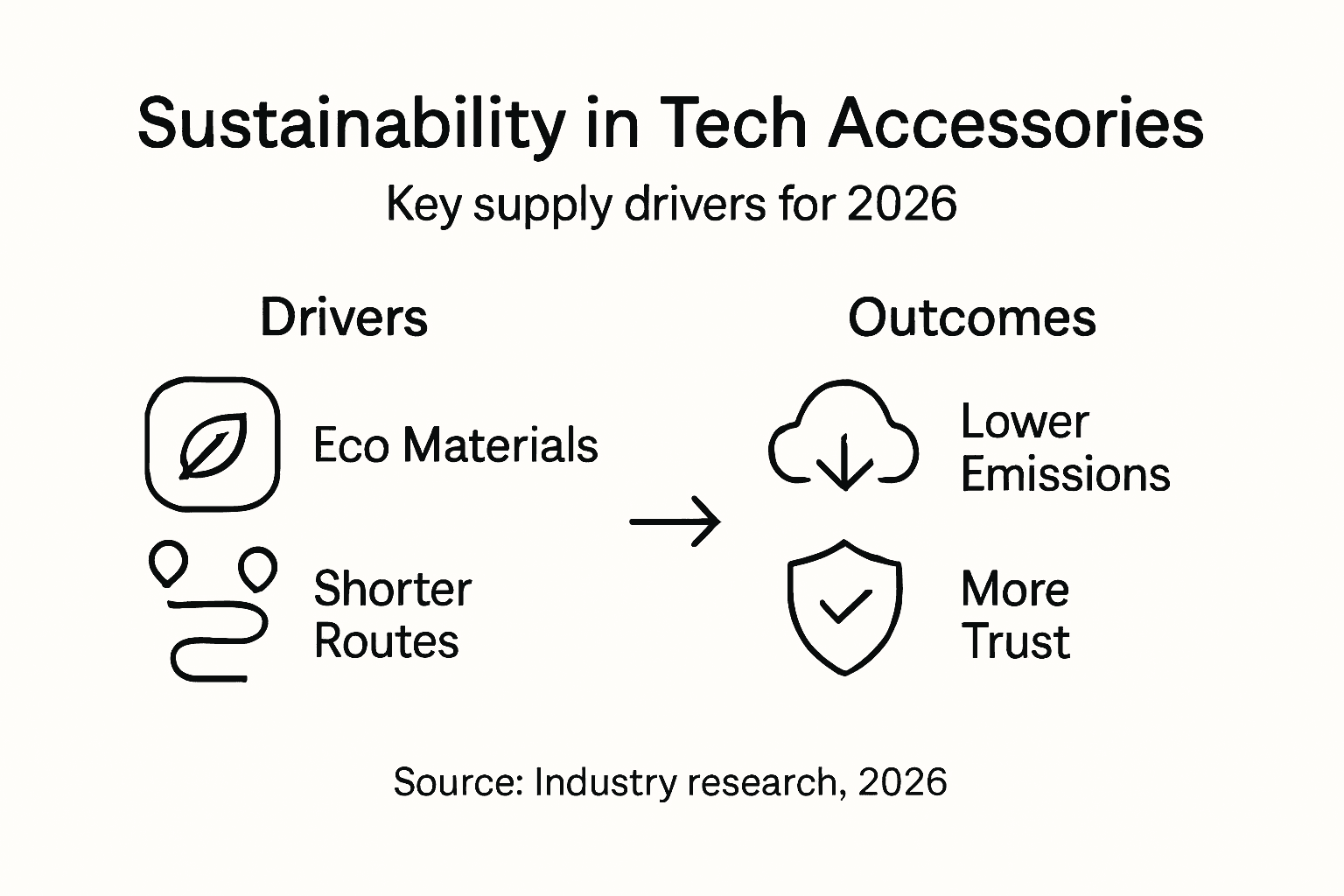
Transparency through product traceability is becoming table stakes for serious e-commerce brands. Customers want to know the origin of materials, the labor conditions in manufacturing facilities, and the carbon footprint of shipping. Advanced technologies now make this transparency feasible. Blockchain-based tracking, product genealogy documentation, and supplier verification systems provide concrete evidence of ethical practices. For print-on-demand operations specifically, this means partnering with POD manufacturers who can provide detailed sustainability certifications and transparent reporting. When you can tell a customer that their custom phone case was produced using renewable energy, printed with eco-friendly inks, and shipped via carbon-neutral logistics, that narrative becomes part of your product value. Brands that master this transparency narrative convert it into premium pricing power and customer advocacy.
Regulatory momentum is simultaneously pushing and enabling this transition. Governments worldwide are implementing stricter environmental standards that affect how products are manufactured and shipped. Rather than viewing regulations as obstacles, forward-thinking entrepreneurs recognize them as market validators. Regulations level the playing field by forcing all competitors to adopt sustainable practices, which means early adopters gain no cost disadvantage. Green logistics optimization, supplier engagement programs, and data-driven sustainability measurement are moving from optional initiatives to mandatory operations. For tech accessory POD businesses, this means evaluating your manufacturing partners through a sustainability lens. Which POD platforms use renewable energy? Which ones prioritize plastic reduction in packaging? Which ones offer carbon-neutral shipping options? These operational choices directly impact your environmental footprint and your brand narrative.
Pro tip: Audit your current POD partners for sustainability certifications and transparency practices, then highlight their environmental commitments in your product descriptions and marketing materials to differentiate from competitors still ignoring this trend.
Marketing Strategies for Digital Product Sales
Marketing tech accessories in 2026 requires abandoning the spray-and-pray approach that dominated the 2010s. Instead, successful entrepreneurs build campaigns around authenticity, trust, and measurable outcomes. Your customers can smell inauthenticity instantly. They scroll past generic product photos and forgettable marketing copy every single day. What stops the scroll is genuine storytelling about why your customized phone cases matter. Brands emphasize authenticity and long-term brand building through interactive and multipurpose campaigns rather than one-off promotions chasing immediate sales. This means showcasing the customer behind the order. Share testimonials from people who bought custom AirPods cases for specific reasons, show the design process, explain the sustainability choices you made in production. Build parasocial relationships with your audience through consistent, transparent communication. Generative AI accelerates this process by helping you create personalized content variations at scale, but the authenticity comes from you, not the algorithm.
Omnichannel integration transforms how you reach customers across their entire journey. A prospect discovers your brand through a TikTok video of someone unboxing a custom phone case. They click through to Instagram, where they see behind-the-scenes content about design and production. They land on your website, where interactive product customizers let them design in real time. They join your email list and receive personalized recommendations based on their browsing behavior. Each touchpoint reinforces trust and moves them closer to purchase. Digital marketing strategies emphasize AI integration, personalization, and data-driven decision-making across the customer lifecycle, meaning your systems track customer interactions and adapt messaging accordingly. Someone who showed interest in gaming accessories receives different messaging than someone browsing minimalist designs. Automation handles repetitive tasks like welcome sequences and abandoned cart emails while you focus on creative strategy.
Content quality and conversion optimization directly impact your bottom line. Instead of posting randomly, plan content calendars that address customer pain points. Create tutorials showing how to design custom cases. Share comparison content explaining why quality matters in phone case materials. Produce user-generated content campaigns encouraging customers to showcase their customized accessories. Invest in professional product photography and videography because tech accessories are visual products demanding visual excellence. Track metrics obsessively. Know which content formats drive conversions, which social platforms deliver qualified traffic, and which email subject lines generate opens. Budget allocation should reward high-performing channels and campaigns while pruning underperformers ruthlessly.
Pro tip: Build your marketing calendar around customer milestones like back-to-school season, holiday gift-giving, and phone release cycles rather than arbitrary promotional dates, then create targeted content and campaigns that speak directly to each moment.
Elevate Your Tech Accessory Designs with Professional Mockups
Navigating the growing opportunities in print-on-demand for tech accessories means standing out with bold, authentic visual presentations. This article highlights the importance of personalization, sustainable practices, and AI-driven customization to captivate customers and boost sales. If you want to showcase your unique iPhone or AirPods case designs with photorealistic quality that reflects these 2026 trends, start with expertly crafted mockups.
Explore our extensive collection of iPhone 2D Case Mockups - Samsung 2D Case Mockups – Bettermockups and AirPods Case Mockups – Bettermockups designed to bring your personalized creations to life. Whether launching new niche products or testing innovative designs, Bettermockups provides the ready-to-use visual assets that save time and amplify buyer confidence. Visit Bettermockups today and take the first step toward turning your tech accessory ideas into compelling offerings that convert.
Frequently Asked Questions
What is print-on-demand (POD) and how does it work for tech accessories?
Print-on-demand (POD) is a business model that allows businesses to create and sell custom products only when customers place an order. In the context of tech accessories, this means that products like phone cases or AirPods covers are made and shipped directly to customers, eliminating the need for large inventory and reducing financial risk.
What are the key trends driving the growth of tech accessories in 2026?
Key trends include rising consumer demand for personalization and customization, increased emphasis on sustainability, and advancements in technology that streamline production processes. Consumers now expect tech accessories that reflect their identity while aligning with their values, such as environmentally friendly practices.
How can AI enhance the design and production process in the POD model?
AI helps automate time-consuming tasks such as generating product mockups and managing inventory across multiple sales channels. It allows for rapid design iterations and real-time personalization based on customer preferences, ultimately improving efficiency and reducing errors in order fulfillment.
Why should tech accessory entrepreneurs consider sustainability in their products?
Sustainability is increasingly demanded by consumers, who prefer brands that minimize environmental impact. Using POD can greatly reduce waste because only products that are ordered are produced. Additionally, eco-friendly materials and sustainable practices can also justify higher pricing, attracting a premium customer base.
Recommended
- A Guide to the Phone Case UV Printer – Bettermockups
- A Guide to 3D Phone Case Printing for Your Business – Bettermockups
- Your Guide to the Best Phone Case Printer – Bettermockups
- Start Your Biz with a Phone Case 3D Printer – Bettermockups
- Trends in Custom Fashion 2026: Bold Style and Personalization – Prima Dons & Donnas


