

Finding the right print-on-demand solution for tech accessories can feel overwhelming when you want both quality and flexibility for your online store. As more North American entrepreneurs embrace pod platforms, the demand for standout product visuals grows. Understanding how mockups and advanced print-on-demand technologies work together puts you in control, helping your listings capture attention and drive sales in a competitive market.
Table of Contents
- Understanding Print Pods For E-Commerce
- Types Of Print Pod Solutions Available
- Integrating Mockups Into Print Pod Workflows
- Essential Features For Tech Accessory Sellers
- Avoiding Common Print Pod Pitfalls
Key Takeaways
| Point | Details |
|---|---|
| Zero Inventory Risk | Print-on-demand allows for product creation only after customer orders, eliminating inventory costs. |
| Customization and Flexibility | Sellers can rapidly adapt designs to meet market demand using advanced technologies. |
| Core Technology Integration | Platforms offer automated tools and AI features that streamline manufacturing and order processes. |
| Common Pitfalls Awareness | Entrepreneurs must avoid undefined target audiences and weak marketing strategies to ensure success. |
Understanding Print Pods for E-Commerce
Print-on-demand (POD) technology represents a transformative approach for e-commerce entrepreneurs seeking flexible and efficient product creation strategies. By enabling businesses to manufacture products only after customer orders are placed, POD eliminates traditional inventory risks and upfront investment challenges.
The core mechanics of print-on-demand involve several key technological innovations that make it a powerful business model for tech accessory sellers:
- Zero inventory risk: Products are created exclusively after customer purchase
- Rapid customization: Real-time personalization of digital designs
- Low startup costs: Minimal financial investment required to launch
- Global market reach: Ability to sell across multiple online platforms
Advanced digital printing technologies have revolutionized how entrepreneurs approach product manufacturing. These systems allow for unprecedented flexibility, enabling sellers to quickly adapt designs, test market demand, and produce items with minimal waste.
Modern print-on-demand platforms integrate sophisticated automation and artificial intelligence to streamline production processes. This technological ecosystem supports real-time product customization, decentralized manufacturing, and efficient logistics management. Entrepreneurs can now create complex tech accessories like phone cases, AirPods covers, and laptop skins with minimal overhead and maximum creative control.
Pro tip: Research multiple print-on-demand platforms and compare their technology integrations, production quality, and shipping capabilities before committing to a specific service.
Types of Print Pod Solutions Available
The print-on-demand landscape offers a diverse array of solutions tailored to meet the unique needs of tech accessory entrepreneurs. These platforms provide varying approaches to product creation, each with distinct advantages and specialized capabilities for online sellers.
Print-on-demand platforms represent a critical technological ecosystem for e-commerce businesses, with key players offering specialized services:
- Printful: Known for in-house production and robust branding capabilities
- Printify: Offers a network of print providers with flexible pricing
- Gelato: Emphasizes localized, sustainable manufacturing
- Redbubble: Specializes in artist-driven designs and global marketplace integration
- TeePublic: Focuses on graphic-intensive product lines
Each platform differentiates itself through unique technological innovations. Printful stands out with comprehensive quality control and consistent product standards, making it ideal for entrepreneurs seeking reliable, predictable output. Printify provides maximum flexibility by connecting sellers with multiple global print providers, enabling cost optimization and diverse product selections.
Here’s a comparison of leading print-on-demand platforms for tech accessory sellers:
| Platform | Unique Strength | Ideal User Type | Notable Limitation |
|---|---|---|---|
| Printful | In-house production | Brand-focused sellers | Fewer provider choices |
| Printify | Global print network | Price-conscious users | Quality varies by provider |
| Gelato | Localized fulfillment | Sustainability-driven | Limited design marketplace |
| Redbubble | Artist marketplace | Artist entrepreneurs | Lower control over branding |
| TeePublic | Graphic-focused | Designers with large catalogs | Smaller accessory selection |
Modern print-on-demand solutions go beyond simple manufacturing, integrating advanced technologies like automated design tools, real-time inventory management, and seamless e-commerce platform connections. These sophisticated systems allow tech accessory sellers to scale operations rapidly without significant upfront investments.
Pro tip: Compare multiple print-on-demand platforms by requesting sample products to personally evaluate print quality, shipping speed, and overall product consistency.
Integrating Mockups Into Print Pod Workflows
Successful print-on-demand entrepreneurs understand that visual presentation can make or break their online product sales. Mockup templates represent a critical tool for transforming digital designs into compelling product visualizations that drive customer engagement and conversions.
Effective mockup integration into print-on-demand workflows involves several strategic approaches:
- Design Compatibility: Ensure mockup templates match exact product dimensions
- Brand Consistency: Select mockups that reflect your brand’s aesthetic
- Platform Optimization: Use mockups tailored for specific sales channels
- High-Resolution Quality: Prioritize clear, professional-grade image templates
- Versatile Presentation: Choose mockups showing products from multiple angles
Tech accessory sellers can streamline their workflow by developing a systematic approach to mockup selection and implementation. This involves carefully matching mockup styles with product designs, understanding platform-specific image requirements, and creating a consistent visual narrative that appeals to potential customers.

Advanced print-on-demand sellers leverage mockups as more than just product representations. These visual assets serve as powerful marketing tools, enabling entrepreneurs to showcase design variations, demonstrate product features, and create emotional connections with potential buyers through professional, context-rich imagery.
Pro tip: Create a standardized mockup template library that includes multiple product angles, backgrounds, and device variations to maximize your visual marketing flexibility.
Essential Features for Tech Accessory Sellers
Tech accessory entrepreneurs must strategically select print-on-demand platforms that offer comprehensive capabilities beyond basic product manufacturing. Best print-on-demand platforms provide sellers with robust tools and features designed to streamline online business operations and maximize sales potential.
Critical features tech accessory sellers should prioritize include:
- Extensive Product Catalog: Wide range of tech-specific items
- White-Label Branding: Customizable packaging and product presentation
- E-Commerce Integrations: Seamless connections with major sales platforms
- High-Quality Mockup Tools: Professional marketing image generation
- Fast Shipping Options: Quick order fulfillment and delivery
- Scalable Manufacturing: Ability to handle increasing order volumes
Successful tech accessory sellers understand that platform selection goes far beyond simple product printing. The most effective print-on-demand solutions offer integrated marketing tools, real-time inventory management, and sophisticated design interfaces that enable entrepreneurs to quickly adapt to market trends and customer preferences.
Advanced platforms now incorporate artificial intelligence and machine learning technologies to help sellers optimize their product designs, predict market demand, and create more targeted marketing strategies. These technological innovations transform print-on-demand from a simple manufacturing model into a comprehensive business ecosystem.
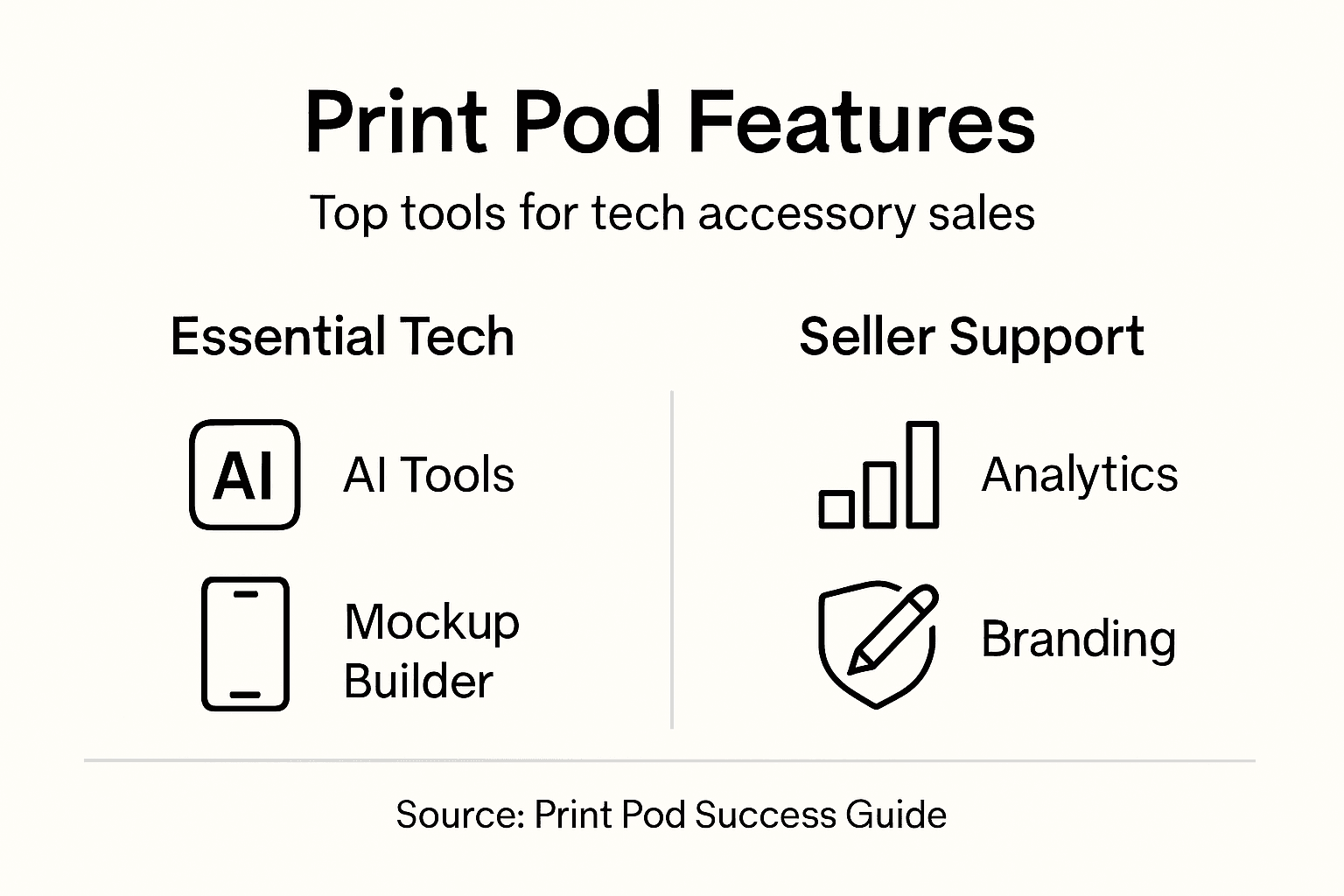
Below is a summary of technologies that power advanced print-on-demand workflows:
| Technology | Function | Business Advantage |
|---|---|---|
| AI Design Tools | Automates custom image creation | Speeds up design iteration |
| Real-Time Inventory | Tracks stock dynamically | Prevents overselling |
| E-Commerce Integrations | Connects to sales channels | Enables multi-platform selling |
| Automated Fulfillment | Streamlines order processing | Reduces manual errors |
Pro tip: Regularly audit your print-on-demand platform’s features and compare them against emerging market technologies to ensure you maintain a competitive edge.
Avoiding Common Print Pod Pitfalls
Navigating the print-on-demand landscape requires strategic awareness and proactive problem prevention. Common print-on-demand mistakes can significantly undermine an entrepreneur’s potential for success, making it crucial to understand and mitigate potential risks before they escalate.
Key pitfalls tech accessory sellers must carefully avoid include:
- Undefined Target Audience: Failing to identify specific customer demographics
- Weak Marketing Strategy: Inconsistent or unfocused promotional efforts
- Design Quality Issues: Producing low-resolution or unappealing graphics
- Incomplete Competitive Analysis: Neglecting to research market trends
- Insufficient Store Setup: Poor product descriptions and unprofessional presentation
- Pricing Miscalculations: Improper cost and profit margin strategies
Successful entrepreneurs recognize that print-on-demand success extends far beyond simply uploading designs. Comprehensive market research, continuous design refinement, and strategic positioning are essential components of building a sustainable online business. Understanding platform limitations, staying updated on technological trends, and maintaining flexibility in product offerings can help sellers navigate potential challenges.
Technology plays a critical role in mitigating print-on-demand risks. Advanced platforms now offer sophisticated analytics, automated design tools, and real-time market insights that can help sellers make data-driven decisions. By leveraging these technological resources, entrepreneurs can significantly reduce operational uncertainties and improve their chances of sustained success.
Pro tip: Conduct monthly performance audits of your print-on-demand store, analyzing design performance, customer feedback, and market trends to continuously optimize your business strategy.
Elevate Your Tech Accessory Sales with Professional Mockups
A key challenge in print-on-demand success is creating compelling product visuals that truly capture customer interest and convey high quality. This article highlights how integrating photorealistic mockups into your workflow boosts brand consistency and drives conversions by showcasing your designs in the most appealing way. If you want to avoid common pitfalls like weak marketing presentations or low-resolution graphics, investing in premium mockups makes all the difference.
Discover a tailored selection of realistic digital templates designed specifically for tech accessories at AirPods Case Mockups – Bettermockups and explore versatile design options through Podbase Style Mockups – Bettermockups. These assets will help you maintain high product quality and brand professionalism effortlessly.
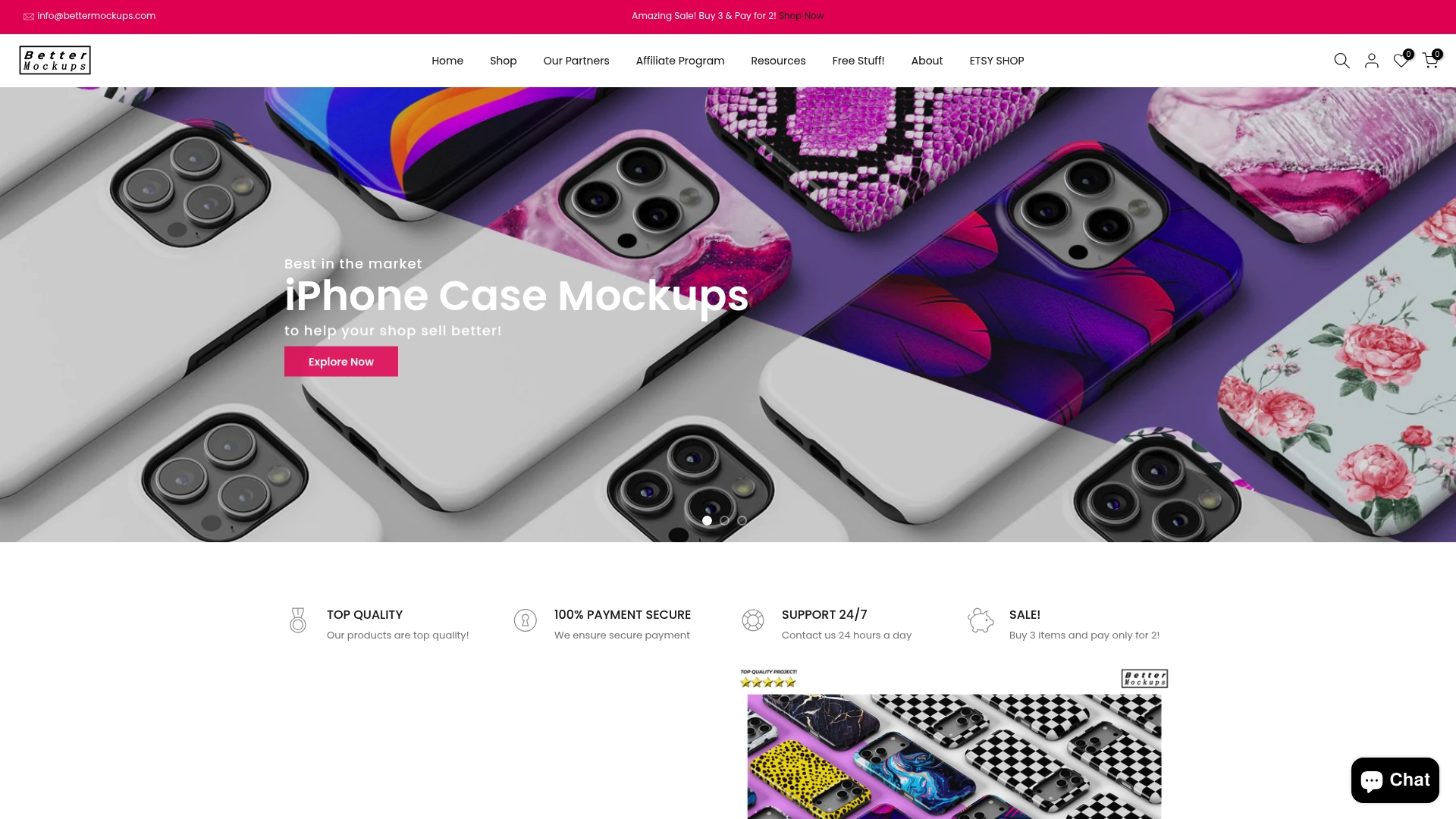
Transform your online store today by using Bettermockups’ expert-crafted PSD and Canva mockups. Visit Bettermockups now and take the crucial step toward scalable, eye-catching product listings that convert visitors into loyal customers. Start enhancing your tech accessory brand with visuals proven to increase sales and customer engagement.
Frequently Asked Questions
What is print-on-demand (POD) technology?
Print-on-demand (POD) technology allows e-commerce entrepreneurs to produce items only after customer orders are placed, eliminating the risks associated with holding inventory and reducing upfront costs.
How can I integrate mockups into my print-on-demand workflow?
To effectively use mockups in your POD workflow, ensure they are compatible with product dimensions, maintain brand consistency, optimize for your sales platform, and use high-resolution templates to showcase your designs attractively.
What features should I look for in a print-on-demand platform for tech accessories?
Key features to consider include an extensive product catalog, customizable branding options, seamless e-commerce integrations, high-quality mockup tools, fast shipping capabilities, and scalable manufacturing to accommodate order growth.
What common mistakes should I avoid when starting with print-on-demand?
Common pitfalls include not defining your target audience, having a weak marketing strategy, producing low-quality designs, neglecting market research, poorly setting up your store, and miscalculating pricing strategies.


